Anion Gap Calculator: Lab Normal Values and Analysis
What the Anion Gap Assesses
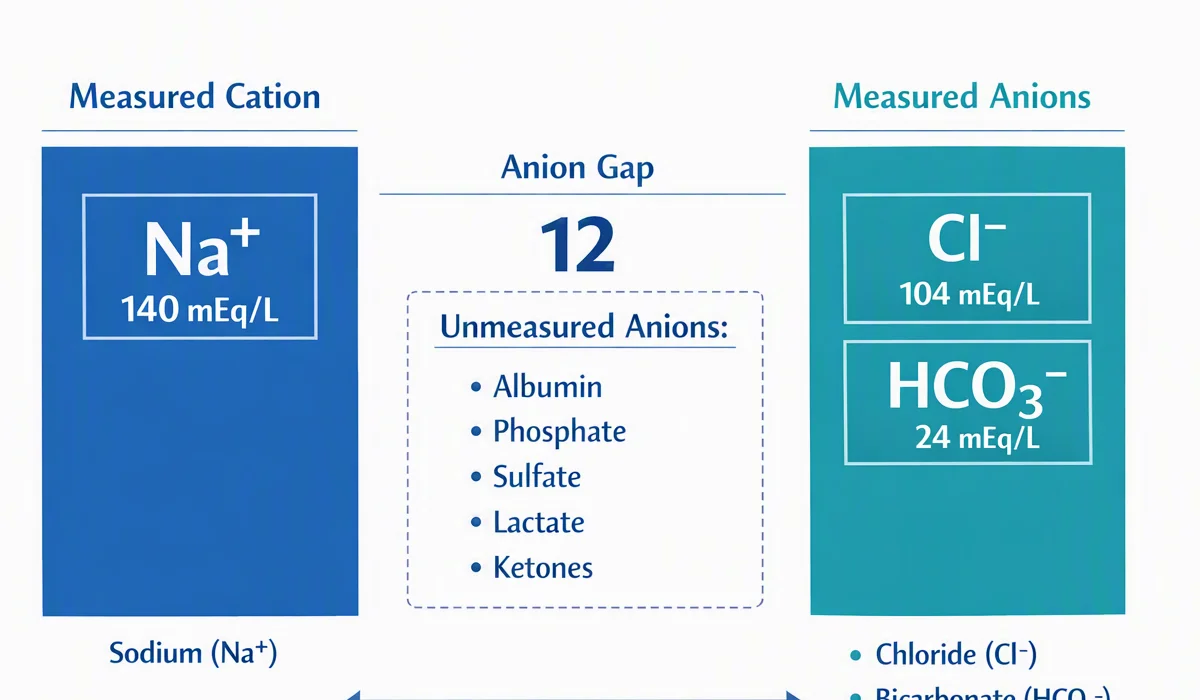
The anion gap is a calculated value used to help evaluate serum electrolytes and detect acid-base balance disorders. An Anion Gap Calculator uses routine blood chemistry inputs to calculate the gap between measured positive and negative substances in the blood. In basic terms, it helps reveal the anion-cation separation that is not directly reported on standard lab results.
This matters because the body maintains electroneutrality: total positive charge must balance total negative charge. Since common serum electrolytes do not capture every ion present, the anion gap helps approximate the contribution from unmeasured ions and unmeasured anions. That makes it a helpful diagnostic clue when reviewing a metabolic derangement or acid-base disorder.
Clinically, the anion gap is part of interpretive context rather than a stand-alone diagnosis. It is often assessed alongside bicarbonate, pH, and other serum electrolytes to determine whether a patient has a normal anion gap pattern or a high anion gap https://anion-gap-chart421.talesignal.com/posts/anion-gap-calculator-and-interpretation-guide pattern. It can also direct attention toward conditions such as metabolic acidosis, renal failure, or toxin exposure.
How to Use an Anion Gap Calculator
To use an Anion Gap Calculator, enter the main lab values from the patient’s serum electrolytes, most often sodium, chloride, and bicarbonate. They are commonly reported on a basic metabolic panel, and they may also appear on a broader electrolyte panel. The calculator then calculates the anion gap formula to return a calculated value that can be compared with lab reference values.
Most online calculators apply this approach:
- Input sodium as the main measured cation
- Provide chloride as the main measured anion
- Input bicarbonate as the other major measured anion
The result is only meaningful when read against the reference range used by the laboratory. Various instruments and reporting methods can lead to slightly different lab results, so the same number may be interpreted differently depending on the lab reference values and local reference interval. For this reason the calculator should be used as a guide for clinical interpretation, not as an isolated verdict.
Before drawing conclusions, confirm that the values come from a recent specimen, that there is no obvious hemolysis or sample issue, and that the lab results fit the clinical picture. If something does not match, repeat testing or broader medical evaluation may be needed.
Anion Gap Formula and Calculation Examples
The formula for the anion gap is easy to understand. In its most common form, it is:
Anion gap = sodium - (chloride + bicarbonate)
Some laboratories add potassium, but the standard formula used in many clinical settings relies on sodium, chloride, and bicarbonate. That is why the anion gap is easy to calculate from a basic metabolic panel or electrolyte panel.
Worked example: Imagine a patient has sodium 140, chloride 104, and bicarbonate 24. The calculation is 140 - (104 + 24) = 12. The result is often within a typical reference range, though interpretation depends on the laboratory’s reference interval.
Another worked example: Suppose sodium is 138, chloride is 98, and bicarbonate is 14, the calculation is 138 - (98 + 14) = 26. That is a high anion gap and may suggest excess unmeasured anions contributing to metabolic acidosis. In practice, that finding would prompt attention to causes such as lactic acidosis, ketoacidosis, renal failure, or toxic alcohols.
As the calculator converts raw blood chemistry into a meaningful number, it is valuable for rapidly screening for acid-base abnormalities. Still, the number alone does not identify the cause. Clinical interpretation requires review of the entire lab context, symptoms, and often additional testing.
Standard Anion Gap Normal Ranges
The typical range for the anion gap is not the same across every lab. The reference interval depends on the analyzer, method, and whether potassium is included. That is why lab reference values matter so much when interpreting the result from an Anion Gap Calculator.
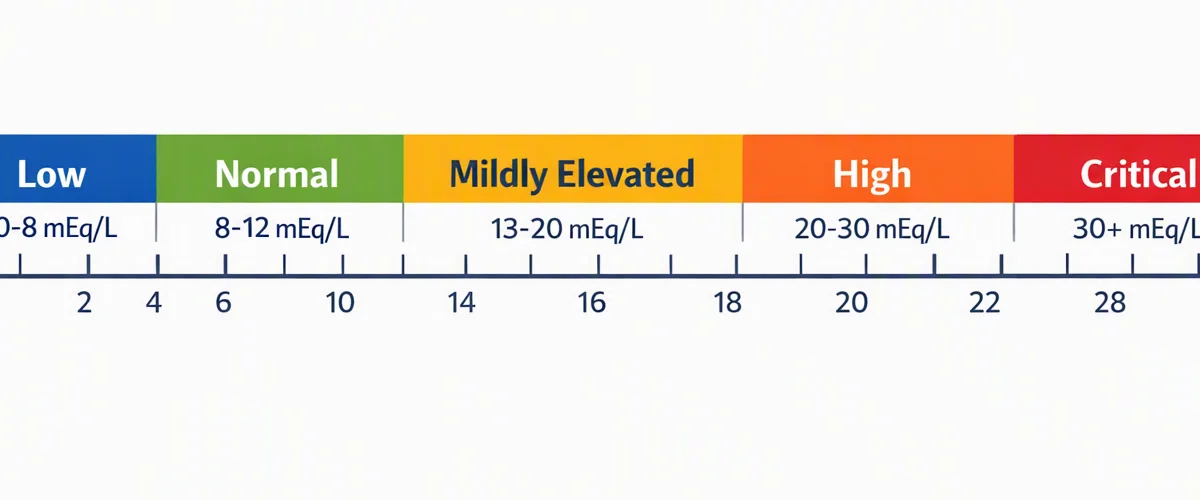
In many adult settings, a typical normal anion gap is roughly in the low double digits, but the exact range may be larger or tighter depending on lab variation. A value that looks elevated in one report may still fall inside another lab’s reference interval. For that reason, always compare the calculated number with the stated reference range on the report itself.
Albumin also affects what counts as normal. Since albumin is a major negatively charged protein in plasma, lower albumin can make the apparent anion gap look lower than expected. In patients with hypoalbuminemia, the usual reference interval may fail to reflect the presence of excess unmeasured ions.
Important points to remember:
- The reference interval is specific to the lab
- Albumin can alter the apparent baseline
- Lab variation is common across analyzers and reporting methods
So, the best way to judge a result is to interpret it in its laboratory context rather than relying on a single universal cutoff.
High Anion Gap: Common Causes
A high anion gap usually signals that unmeasured anions are piling up in the blood. This pattern is often seen in metabolic acidosis and should lead to evaluation for common causes. The result does not specify the disorder by itself, but it is a important diagnostic clue that the acid-base balance has shifted.
Some of the most common causes include:
- Lactic acidosis, where lactate rises because of poor oxygen delivery, shock, seizures, or other metabolic stress
- Ketoacidosis, which may occur in diabetes, prolonged fasting, or alcohol-related states
- Renal failure, where the kidneys cannot clear acids effectively
- Toxic alcohols, including methanol and ethylene glycol, which can produce dangerous metabolic changes
High anion gap metabolic acidosis is one of the key clinical patterns because it can reflect a major metabolic derangement. A patient with this finding may need prompt assessment of blood pressure, breathing, glucose, kidney function, and toxic exposure history. The anion gap helps refine the differential, but the cause must be established with targeted testing and clinical context.
It is also important not to misread the result. Mild elevations can occur from lab differences, changes in albumin, or transient shifts in serum electrolytes. Still, a distinctly high anion gap should not be ignored.
Decreased Anion Gap: Typical Origins
Low anion gap is rarer than a higher value, but it can still be clinically meaningful. It may reflect a measurement issue, a shift in protein levels, or the presence of unmeasured cations. Because the normal anion gap is often interpreted more often than the low one, low values can be overlooked unless the clinician is specifically looking for them.
Possible causes include:
- Low albumin, which lowers the main unmeasured negatively charged protein in the blood
- Multiple myeloma, where abnormal proteins can alter the anion-cation difference
- Testing error, including specimen or analytical problems
- Extra cations, such as certain medications or excess positively charged ions
Low anion gap should first bring up the possibility of a technical issue, especially if the value is unexpected and does not fit the patient’s condition. Retesting can be a simple first step. If the result persists, the clinician may consider protein abnormalities, medication effects, and other causes of altered serum chemistry.
Although a low anion gap is not as dramatic as a high one, it can still provide a useful diagnostic hint, especially when paired with anemia, kidney abnormalities, or unexplained symptoms.
In What Way Does Albumin Influence the Anion Gap
Albumin is a major unmeasured anions in plasma. Since it helps maintain the negative charge balance, changes in serum albumin directly affect the anion gap. When albumin is low, the measured gap may seem lower even if there are additional unmeasured ions present.
That is why albumin correction is often recommended. A corrected anion gap seeks to adjust the calculated value based on the patient’s serum albumin, giving a better estimate of the true acid-base picture. The corrected anion gap is especially useful when hypoalbuminemia is present, since the uncorrected result may obscure a clinically significant high anion gap.
Protein binding also plays a role. Albumin binds various ions and influences the overall electrical balance in blood. When serum albumin drops, the body’s compensation shifts, and the standard calculation may no longer show the same physiologic meaning.
In practical terms:
- Decreased serum albumin can hide an elevated gap
- Albumin adjustment supports clinical interpretation
- The corrected anion gap may better reflect underlying unmeasured anions
For this reason, albumin should be checked whenever the result seems unexpectedly low or when the clinical picture suggests an acid-base disorder despite a borderline number.
Reading Results along with Related Lab Values
The anion gap should be interpreted alongside other lab values rather than alone. A high or low value is most useful when paired with pH, arterial blood gas, lactate, and renal function. Collectively, these tests provide a fuller view of acid-base balance and the underlying blood chemistry.
An arterial blood gas can show whether acidemia or alkalemia is present and whether respiratory compensation is occurring. If pH is low and the anion gap is high, that supports a metabolic acidosis pattern. If lactate is elevated, lactic acidosis becomes more likely. If renal function is impaired, retained acids from kidney dysfunction may explain the abnormality.
Key interpretive pairings include:
- pH and bicarbonate for acid-base status
- lactate when lactic acidosis is a concern
- renal function when kidney clearance may be reduced
This broader interpretation helps distinguish a true metabolic acidosis from a misleading isolated value. It also helps identify mixed disorders, where more than one process is affecting the result. In other words, the anion gap is a diagnostic clue, but the full picture comes from combining the calculator with the rest of the laboratory and clinical data.
When to Get Medical Evaluation
An abnormal anion gap may require prompt medical evaluation, especially if it is accompanied by concerning symptoms or severe abnormalities in other labs. This is particularly true when severe acidosis is present, because acid-base disturbances can affect heart function, breathing, and mental status.
Seek urgent assessment if the person has:
- Signs of severe acidosis
- Clear electrolyte imbalance
- Vomiting, confusion, rapid breathing, or marked weakness as symptoms
- Evidence of shock, intoxication, or worsening kidney function
Clinical assessment matters because the same number can mean very different things depending on the patient. A mild high anion gap in a stable person may warrant outpatient follow-up, while the same result in a sick patient could signal an emergency. Medical evaluation is especially important if toxic alcohols, ketoacidosis, or renal failure are possible.
Do never rely on a calculator by itself when the patient appears unstable. The lab result should reinforce, not replace, bedside judgment and rapid care.
Frequently Raised Questions
What is an anion gap calculator used for?
An anion gap calculator is used to estimate the anion gap from routine lab results, typically sodium, chloride, and bicarbonate. It helps clinicians understand electrolyte abnormalities, spot a possible acid-base disorder, and decide whether additional testing is needed. It is especially helpful for spotting metabolic acidosis patterns and supporting clinical interpretation in the context of lab results.
What is a normal anion gap range in lab reference values?
The normal anion gap range depends on the laboratory’s reference interval and analyzer method. There is no single universal number. That is why lab reference values matter: a result should always be compared with the range printed by the lab. Albumin level and lab variation can also shift what is considered normal anion gap.
How do you calculate the anion gap from sodium, chloride, and bicarbonate?
Use the anion gap formula: sodium minus the sum of chloride and bicarbonate. In formula form, it is sodium - (chloride + bicarbonate). This calculation is often done from a basic metabolic panel or electrolyte panel. The result is a calculated value that should be compared with the lab’s reference range.
Why does low albumin change the anion gap?
Low albumin changes the anion gap because albumin is a major unmeasured anion in the blood. When serum albumin falls, the measured gap can appear lower even if clinically important unmeasured ions are present. That is why albumin correction and the corrected anion gap are useful for better interpretation.
What does a high or low anion gap mean clinically?
A high anion gap often suggests metabolic acidosis due to lactic acidosis, ketoacidosis, renal failure, or toxic alcohols. A low anion gap may be caused by hypoalbuminemia, multiple myeloma, lab error, or unmeasured cations. In both cases, the number is a diagnostic clue, but clinical interpretation requires the full context, including pH, arterial blood gas results, symptoms, and other blood chemistry findings.